Pages

Wednesday, February 6, 2013

FA 627: Assignment 1 - Peter Paul Rubens

For our first assignment for Figure Studio 2 we were ask to choose a artist from a list given by our instructor. It was a list of figurative classical painters. On the list was Rubens, perhaps one of my most favorite painters. His work had a subtle erotism, which he worked into paintings depicting religious, mystical and contemporary themes.

Rubens was one of the most prolific artist of the Borque. He was not only an artist, but a diplomat, scholar, amateur architect, and could speak several languages. . Helping to negotiate peace between Spain and England. (Neret )

Rubens setup studios throughout the European continent. Studios which allow him to increase his production and transpose his ideas to innumerable canvases, sculpture, tapestries and engravings. ( Neret )


http://upload.wikimedia.org/wikipedia/commons/4/42/Peter_Paul_Rubens_-_The_Judgment_of_Paris_-_WGA20312.jpg

The Judgement of Paris is one of many themes that Rubens revisited. The work is lyrical throughout its composition. The poses and gestures of each figure a reaction to the others. This helps the eye arch across the canvas before returning to investigate the intricacies of the each froms. The employ of light and shadow frame the areas of interest helping to focus the viewers gaze. The bright saturated colors of the foreground help the bodies burst off the canvas while the more muted colors of the background helps to push the scenery into the distance.


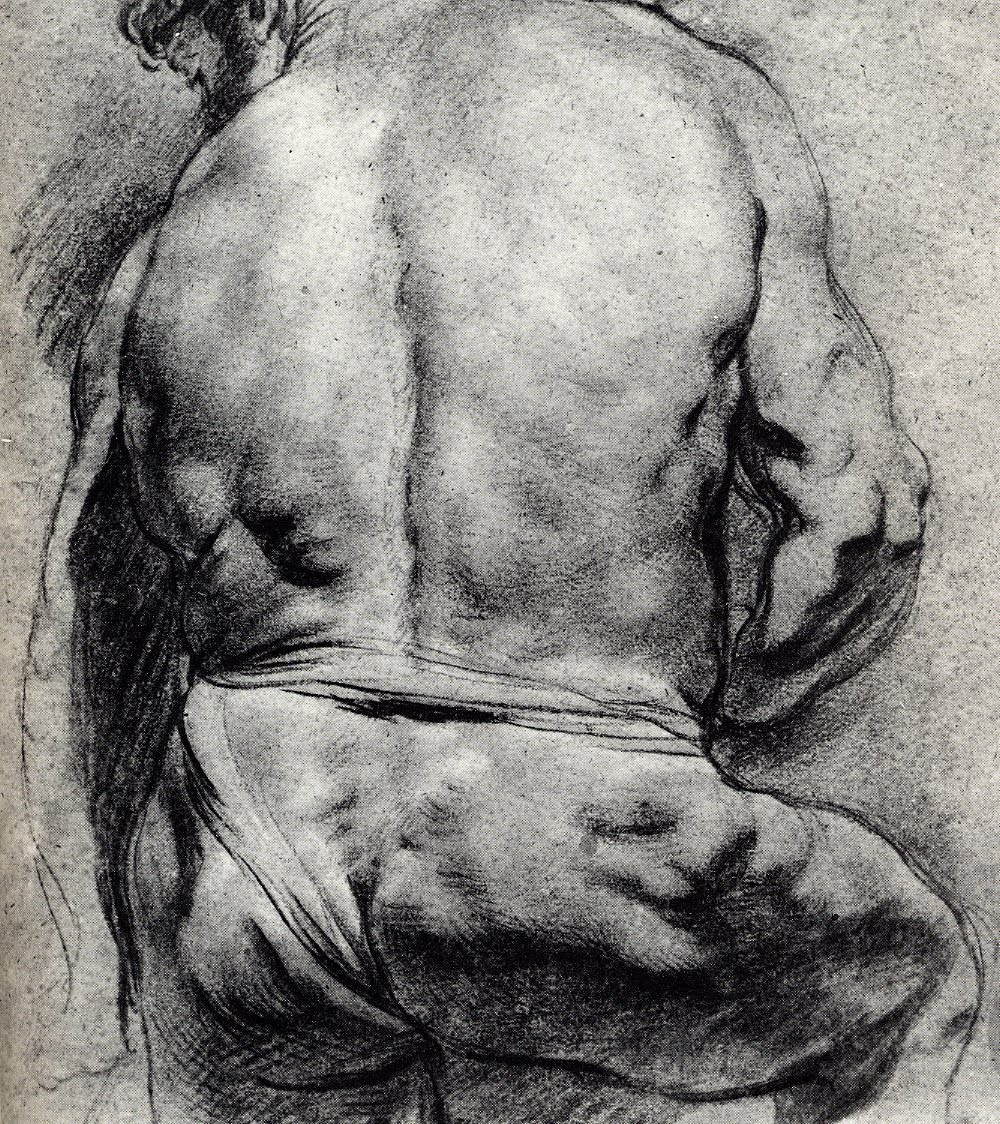
http://2.bp.blogspot.com/-1jUwd0fCc2g/TaIKILrBxqI/AAAAAAAACqI/2AnFaFEJP_0/s1600/rubens.jpg

Rubens was a master of the form with the ability to capture all the minute turns of the surface. His use of cross hatching to build and define the surfaces of the musculature disappears when viewed as a whole. Here you can see how is understanding of gesture exhibited in his drawing translates to his paintings.

This skill and his ability to depict his models flesh in a very life like way puts Rubens as one of the premiere painters of all time.

Neret, Gilles. Rubens. Koln: Taschen, 2004. Print.

Tuesday, December 18, 2012

The future of animation


The future of animation will be build around the artist. The days of large studios is coming to an end. Artist now have the ability to work from anywhere in the world with an internet connection. Free and open software has also given these home based artist tools to do high quality work. Imagine the possibility of animation work force that can scale beyond the boundaries of the studio infrastructure to produce animation faster and more efficiently. Robert Valley a prominent animator,  character designer and comic author has embraced this new paradigm of creating animation. “You have an idea, you turn into a book, the book is a storyboard for the film.”  Robert continues on the say that the ultimate goal of his projects is to make a film, and that creating a book reflexes one part of the animation process. Robert Valley like many artist today art creating home studios to create their work, “Unlike 10 years ago, I can actually sit here with my computer and Cintiq and I can basically do the film here.” Microfunding services like Kickstarter and Indiegogo have also given artist a way of funding their projects that allow them to work outside of market research or corporate interest.
Technology and the internet have opened the channels for artist to create stories that are personal and cutting edge. Phil Tippett Studios has returned to their roots of stop motion animation with the project “MAD GODS” which is funded through Kickstarter. The proliferation of 3D forced Tippet and many other stop motion animators away from their preferred creative expression. Through independent funding sources, web based distribution channels these artist are helping to decentralize the control of animation production and return it to the individual artist.


Sunday, December 16, 2012

One Small Task

7/15
3 pm: Phone conversation between Nick and I.

Nick: Hey Bethany can you do me a favor?

Bethany: Sure.

Nick: Can you post something to my blog that says I am without technology and will blog as soon as possible.

Bethany: Okay!

Ideas run through our heads. We decide that I will draw a picture of a cabin and explain the circumstances. I am overly excited.

I hang up with Nick and run to Fresh Friday's on Garfield St. (a gardener's exchange). The whole time I think about how awesome my post is going to be. I even plan a "shout out" section.

6pm: I help close down Fresh Friday's and head to Trinity Lutheran for their monthly meal. (It's always free and usually delicious). Throughout the meal I talk about Nick's blog, how awesome it is, and how I get to post on it. After eating I hurry home, overly excited to post to Nick's blog.

7pm: I get home. There's dogs. I forgot about the dogs. We take a long walk. I envision my drawing, a cabin on a cliff.

8pm: I clean off my desk and sit down to draw.

8:30pm: 3 drawings later and I have nothing good enough to post to the blog. I decide that since I have no drawing skills it will be best for me to draw directly into the computer using a program. I Google free drawing software and download SketchUp8.

9pm: After watching a few tutorials and attempting the cabin I decide that I should stick to something I know. I head into Google Docs and create a new drawing. (Thanks to note taking during Geo Science class I feel as though I can handle a drawing in Google Docs.)

9:07pm: I Google how to draw a cabin and find this website.

10:00pm: AHHHHH. Move object back, move object forward, line up lines. Why is there no snap in Google drawing?

11pm: I head into Photoshop to color my "not quite finished cabin." I'm tired, grumpy, and hungry. I am no longer overly excited. This simple task was not so simple.

12am: I have forgotten how to use Photoshop and decide that it's time to go to bed. I don't save anything.

12:17am: I can't sleep. I can't stop thinking about my cabin and this post. I jump out of bed and turn my computer back on. Now for some reason Photoshop is working. I quickly color my "not quite finished" cabin, place in a chimney, and save it as a jpeg.

12:45am: Time to post.

1am: Victory!

1:07am: Don't think you are getting something tomorrow. Well maybe. Maybe I'll just work on it all day long and get you a picture of our family, stick person style.

Monday, November 19, 2012

Open Movie Project: Milo Project


Peanut Butter Jelly Jam ( Milo Project ) is a project to create a 2 minute animated short using a transparent production processes and open source software.  

The short is about a boy named Milo who is left home alone with his musical robot babysitter named MP3. His mother steps out to run an errand. While out mother gives Milo permission to make a snack and reminds him not to make a mess, but mom returns home to the fall out of  Milo’s snack making independence.


Completion of this animation will serve as portfolio piece for finding more animation work for me and the artist who work on the project. This project will also include a teaching and learning component. Allowing interested artist professional and amateur to learn the process of creating sequential media.

In keeping with the Open Source nature of this projects I wanted to make all aspects of the production available to the public. As I move through the process of creating this project I am hoping to document the various skills, software and technique needed to make a project of your own.

The first step in making any story is to establish a history for the characters. To do this I am creating a 23 page comic book. The book will allow me to design the character locations and assets that may be used in the film. I have created a document on the eight essential steps to creating comics pages and will be expanding on this as I go through the various steps. The comic and its associated Kickstarter will also serve to generate revenue to help funds for the final project.

I would like to also invite everyone to participate the creative process. I will be making my working script available to the world. I want people to experience the journey from the beginning of the production all the way through completion. 

What I hope to show is that when I begin I am squarely focused on what happens and less on grammar, structure or style. This allows me to get the whole picture out quickly so that I can begin refining. I break down the idea into components and address them one at a time as I refine the story. Please take a look and feed back is welcome!

Monday, September 24, 2012

Disney; King of the hill since 1937


Topic 2_2: What was Disney’s greatest contribution?

No single studio has contributed the the animation industry more then Disney. The studio brought the industry many innovations. Everything from the use of sound in their early cartoons, to the refining of digital 3D. Disney’s technical innovations have always redefined the edge. But the greatest contribution of the Disney Empire was the creation and employ of the storyboard. “I had never seen a storyboard until I came to Disney’s in 1933. We outside of of Disney’s had always thought that he had some great secret that made his cartoons so perfect. When I saw the the storyboards I thought, AHa! That is it!” said Dick Huemer(Maltin, 30). Although there were many other pieces of the production that lead to “perfect” cartoons the use of storyboards allowed the animation teams to see the story as a whole before a single frame was animated. The boards along with the creation of a team of artist squarely focused on story would help to make the Disney animation stand alone. All of Disney’s cartoons had solid beginnings, middles and endings, full stories in the absence of dialog. Today storyboards are an essential part of all video production, from live action short films to visual effects heavy summer blockbusters. The term is storyboard has even made it way into the world of software development as a tool for visualizing user interfaces and customer interactivity. The storyboard is an obvious and perfect bridge from going trom ideas expressed orally or writing to visual mediums, be it user software design or feature production.

Topic 2_4:What do you think is the future of the studio?


 The Disney Studio is now a global corporation that employs over 148,000 people in the United States. Disney has purchased Pixar Studios and Marvel Entertainment Group and with these properties the   studio has an endless library to pull from for merchandising and production. Involved in a number of industries animation is just a part of what they do. The studio is now headed by John Lasseter of Pixar, the studio has the potential of reclaiming its position as the number one animation production house, but there is a terrible trend that plagues studios of Disney’s size the need to constantly generate revenue. This I believe leads to the production of safe film that don’t move the medium forward in any way. Even for its size Disney is not static.Outside of the big pipeline productions small teams work on pet projects that bring new things to the forefront. Paper man a Disney short about two passing strangers is challenging the way 2d and 3d animation can be married on screen. Disney research and Pixar research and development teams are constantly looking for more ways of making the workflow easier and less invasive to the artists allowing them to express and create the beauty that we see on screen. Even for it size I believe Disney will have a place in defining what the animation industry will be.


Although Disney animation has always been a leader in the field of animation. Their wide spread audience forces them into a box. What are some of the genre and subject matter would you like to see Disney explore?

Friday, September 21, 2012

The Collective Conscience


My father in law was one of the few people I let read an early version of the book. He loved the stories, but was frustrated they didn't continue. So he suggested one way to approach a book of incomplete stories was to let the audience decide which one should get finished. So that is what I am doing. I am letting the readers decide which story I should complete for Emerald City Comic Con. I want to know which of my stories should I continue. I will take the comic which received the most votes and make it into 23 page book to be debuted on the web and at Emerald City.

To participate get a copy of the book by downloading a copy or by coming to the Jet City Comic Con this weekend and buying a signed copy from the author. Once you have acquired a copy, read through and decide which of the stories you connect with the most. Then make your voice heard by going to my blog (opensrclife.blogspot.com) and completing the single question survey.

The survey runs from September 22nd until October 22nd. so please cast you vote. After the survey closes I will be create a Kickstarter Project to raise funding for a professional print of the winning story.

Create your free online surveys with SurveyMonkey, the world's leading questionnaire tool.

Here is a little information about some of the stories in the book.

Kat and Bunnie is the story of punk girls in the pacific northwest trying to be heard in the world. Kat the child of a a former pop duo, is reluctantly convinced to start a band by her friend Bunnie. While trying to make a little extra cash modeling for a local artist Bunnie finds out her mother, a former herbivore rights activist had an affair with a carnivore.

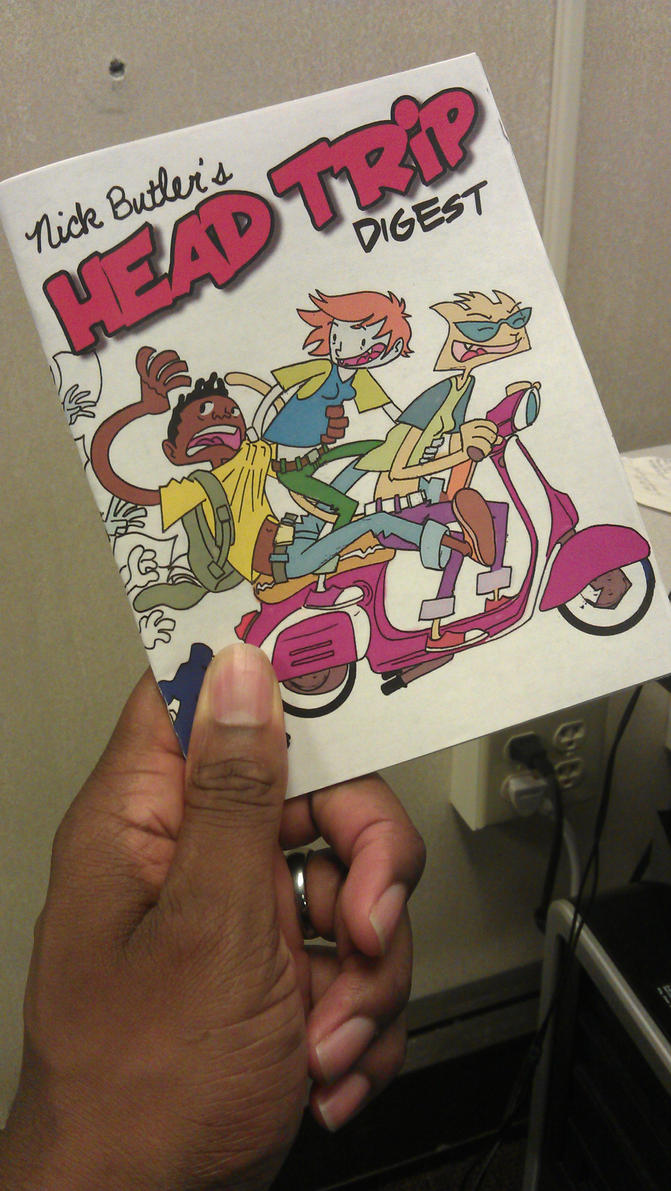
 The Head Trip is a roman a clef about my life while living in Los Angeles. Roman a clef is French for "novel with a key," it describes a novel about a real life with a facade of ficition. In my book The Head Trip I have replaced characters from my life with vampires. The story is about a artist searching for his voice while trying to survive in Los Angeles, until a friend introduces to a culture of vampires who use him as puppet on the international art stage.

Path 2 Nowhere is a story about Nick,  a love sick super hero who goes to live on Earth with his friends Roxy and Karma. Roxy and Karma have been exiled to earth where they live their live as house hold pets. Life is good until one of Nick's ex's comes looking for him, and has no problem conquering the planet to find him and win him back.


 Make War is about a space gun captian who uses her current position to hunt down and destroy the man who broke her heart when she was younger. When she finds him she is willing to sacrifice the lives of an entire city to make him pay.

Love and the Blade is a story of love, revenge and betrayal. The story revolves around Kage, The masked man, and Kin, the blonde assassin, both had been taken from their homes as children and raise a the edge of the sword. The two are alone in this foreign world until the meet on the field of battle. But their blossoming romance is cut short when betrayal brings and end to the reign of Lord Asano, and the lives of these star crossed lovers.

Monday, September 10, 2012

Figurative Journey

Looking forward in this class, please indicate your goals. 
This class will allow me to refine my figure drawing with an emphasis on light and shadow. I understand light and shadow, but I have never really taken the time to master it. I would also like to focus more closely on anatomy, planar surfaces and gradation, and develop a more sculpture feeling in my work. But even with all my focus on detail I would like to achieve a more simplistic accuracy. 

How much do you expect to learn? 
I am hoping to pick up new skills techniques, but mostly I am hoping to develop patience. I have learned in the last few years that the longer you work at a drawing the more polished and refined it becomes. I began figure drawing while pursuing animation, where the focus was more on speed then developing the image. It will be nice to slow down and really think about the form. 

Describe why you are taking this class. It may be just to meet the requirements of the school. It may be to master the human form. 
Life drawing is at the core of everthing in the world of storyboard and 2nd animation. I believe it is the thing that seperates a good animators from a great one. The mastery of the human form gives one the ability to rapidly and easily imagine the characters in any situation from any angle. If I could I would have a figure drawing class every semester, but I will have to supplement with the open drawing session in my area. 

List areas that concern you: Nervousness? Fear of not following through? Looking bad in front of the other students? 
Time, I am very over committed person. I have always had a habit of committing to many things personally and professionally. Since I began school I have not taken on any new projects. My full focus needs to be on school and finishing up the projects I have. 

How much time do you plan to invest each module? 
Study for Libyan Sibyl
Michelangelo
red chalk drawing
1510-11 (Italian Renaissance)
The time that I spent on my extracurricular activities averaged about 30 - 40 hours a week, when my family would let me spend that much time at the computer. But I have been trying to manage my time better so that I leave time for family, work,   projects and school. I am hoping to spend the suggested time for each course plus additional time for working on skills improvement. I would like to put at least 30 hours a week in to my school endeavors. 

Also, make a list of all the benefits that you'll get when the class is over. Completion is always a good feeling. Confidence in your drawing abilities, which extend to other areas in your art, is another one. List as many as you can. 
I hope to have a few new pieces for my portfolio
I would like to regain my life drawing speed 
I am hoping find some inspiration for making new works
build a foundation for my future artistic pursuits
Completion, I have always had trouble with follow through

I hope someday to even partially achieve the skill of Michelangelo I would be happy with what I have achieved. 

Nick Butler
September 10, 2012